Middle Slovakia

Banská Bystrica - Town embraced by Mountains

8 days / 7 night

from 900€

Banská Bystrica


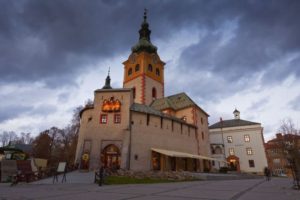
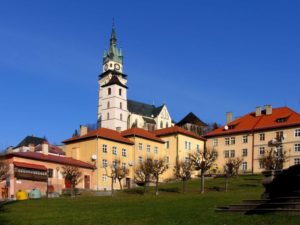
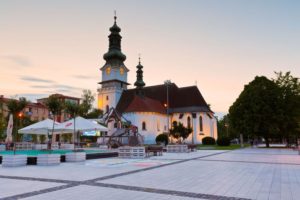
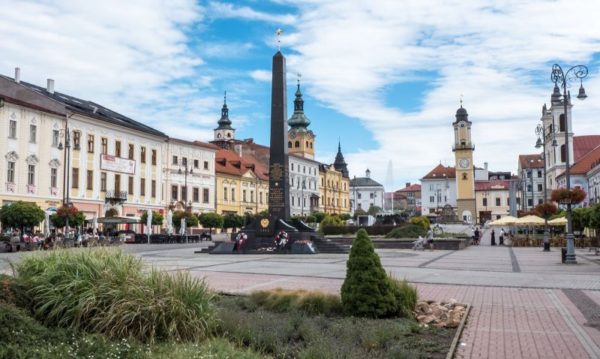
The Banská Bystrica Town Castle, a national cultural monument, represents a characteristic feature of this central Slovak mining town. It also symbolises the whole Banská Bystrica region, which is rich in beatiful landscapes. In mediaval times Banská Bystrica used to be a mining centre that featured the mining of gold, silver and copper. Copper was exported on ship via Polish ports to such distance countries as Portugal or even Benin on the west coast of Africa. The heart of the town is the Slovak National Uprising Square with the Marian Column and the Leaning Clock Tower, the Town Castle Barbakan is in the background with the Church of Assumption of the Virgin Mary, Town Hall, burgher houses, etc. You will find the beautiful Calvary hill above the town. As one of the first towns in Slovakia, this minig town has been proclaimed a landmark conservation area.
1. Day - Arrival to Bratislava

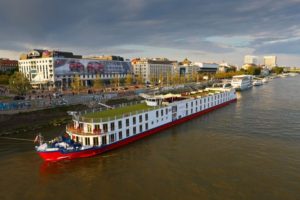
Welcome to Slovakia in  the heart of Europe. Your holiday begins today with a welcome drink with your guide.

Included:

  • Accomodation  in *** or **** hotel
  • Meals : not applicable
  • Meeting with travel guide
  • Welcome drink
  • Overnight

We are able to organise individual transport for individuals and groups at the same time, also we provide information about the possibilities of national transport, bus and train and passenger transport

If you are interested, our guides could personally help you to get to the hotel

Please inform yourself about all of the possibilities by e-mail

2. Day – Visit Bratislava, capital city

  • Breakfast
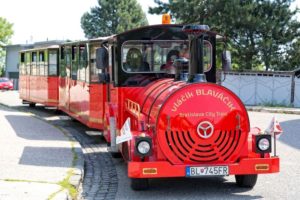
  • Tour of Bratislava and its historical monuments,
  • Visit the most important places of the capital city
  • Lunch
  • Departure to Banská Bystrica
  • Accommodation in *** or **** hotel

*For detailed information on sites and monuments, see – Highlights, Gallery and Maps.

Included:

  • Accommodation: *** or **** hotel
  • Meals: Breakfast, Lunch,mineral water
  • Entrances : all entrances to the monuments
  • Tourist guide
  • Transfer
  • Overnight

3. Day – Banská Bystrica, Vlkolínec

  • Breakfast
  • Tour of Banská Bystrica and its historical monuments
  • Visit the most important places of the city
  • Lunch
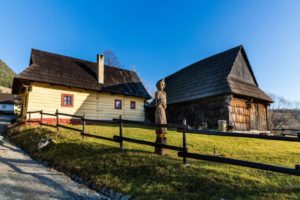
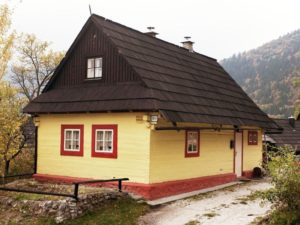
  • Departure to village Vlkolínec, visit this village
  • Return back to the Banská Bystrica

*For detailed information on sites and monuments, see – Highlights, Gallery and Maps.

Included:

  • Accommodation: *** or **** hotel
  • Meals: Breakfast, Lunch,mineral water
  • Entrances : all entrances to the monuments
  • Tourist guide
  • Transfer
  • Overnight

4. Day – Kremnica, Banská Štiavnica

  • Breakfast
  • Departure to Kremnica and town Banská Štiavnica
  • Tour of Kremnica  its historical monuments
  • Visit the most important places of the city
  • Lunch
  • Departure to Banská Štiavnica
  • Tour of Banská Štiavnica,  its historical monuments
  • Visit the most important places of the city
  • Departure to Banská Bystrica

*For detailed information on sites and monuments, see – Highlights, Gallery and Maps.

Included:

  • Accommodation: *** or **** hotel
  • Meals: Breakfast, Lunch,mineral water
  • Entrances : all entrances to the monuments
  • Tourist guide
  • Transfer
  • Overnight

5. Day – Zvolen, Kováčová

  • Breakfast
  • Departure to Zvolen
  • Tour of Zvolen and its historical monuments
  • Visit the most important places of the city
  • Lunch
  • Departure to Kováčová
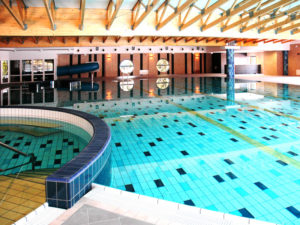
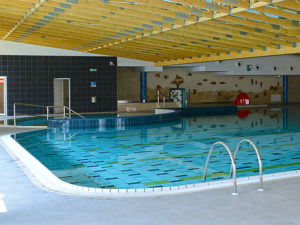
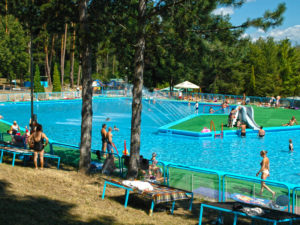
  • Visit Holidaypark with thermal water
  • Return back to Banská Bystrica

*For detailed information on sites and monuments, see – Highlights, Gallery and Maps.

Included:

  • Accommodation: *** or **** hotel
  • Meals: Breakfast, Lunch, mineral water
  • Entrances : all entrances to the monuments
  • Tourist guide
  • Transfer
  • Overnight

6. Day – Low Tatras

  • Breakfast
  • Check out from the hotel Lux***
  • Departure to Low Tatras
  • Tour in Low Tatras
  • Lunch individual
  • Visit Bystrá cave
  • Depareture to Tále
  • Accommodation in *** or **** hotel

*For detailed information on sites and monuments, see – Highlights, Gallery and Maps.

Included:

  • Accommodation: *** or **** hotel
  • Meals: Breakfast, mineral water
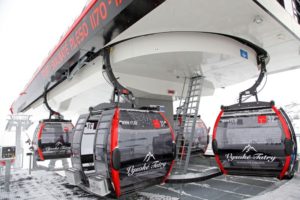
  • Entrances : all entrances to the cave and cableway
  • Tourist guide
  • Transfer
  • Overnight

7. Day – Orava Castle and rafting on the river Orava

  • Breakfast
  • Departure to Orava Castle
  • Visit Orava Castle
  • Lunch
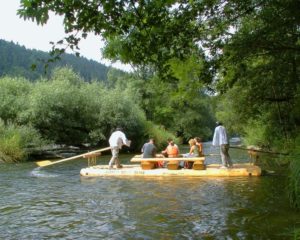
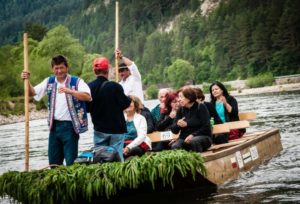
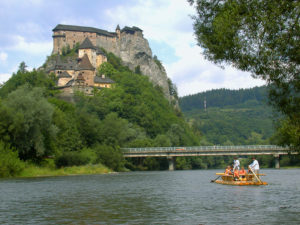
  • Rafting on the Orava river
  • Return back to Tále

*For detailed information on sites and monuments, see – Highlights, Gallery and Maps.

Included:

  • Accommodation: *** or **** hotel
  • Meals: Breakfast, Lunch, mineral water
  • Entrances : all entrances to the monuments and rafting
  • Tourist guide
  • Transfer
  • Overnight

8. Day – Departure

  • Breakfast
  • Check out from hotel
  • Meeting with whe giude
  • Transfer to the Bratislava

Price includes:

  • Accomodation for all 7 nights at 4* or 3* hotel
  • Local tax for 7 night
  • Breakfast every day
  • Mineral water /7x/
  • Lunch  /5x/
  • Welcome drink
  • Travel Guide in English  or required language
  • Travel Agency Insurance
  • Entrance fee for all monuments and all activities
  • Bus transfers every day to all locations
  • Air conditioned cars, vans or buses
  • Professional driver
  • Diesel, parking, motorway fees


Does not include:

  • Airport ticket
  • VISA
  • personal insurance
  • personal expenses

Minimum size of Group is 24 people.

Bratislava

Is the Capital of Slovakia, and with a population of about 450 000 is the larges city. The greater metropolitan area is home to more than 650 000 people. Bratislava is in southwestern Slovakia, occupying both banks of the River Danube and the lest bank of the River Morava. Bordering Austria and Hungary, it is the only national capital that borders two independent countries.
Bratislava is the political, cultural and economic centre of Slovakia. It is the seat of the Slovak president, the parliament and the Slovak Executive. It is home to several universities, museums, theatres, galleries and other important cultural and education institutions. Many of Slovakias large businesses and financial institutions also have headquarters there.
The history of the city has been strongly insluenced by poeple of different nations and religions, namely by Austrians, Croats, Czechs, Germans, Hungarians, Jews and Slovaks. The city was the capital of the Kingdom of Hungary a part of the larger Habsburg monarchy territories, from 1536 to 1783 and has been home to many Slovak, Hungarian and German historical figures.

Monuments :

  • Bratislava old Town
  • St. Elizabeths Church /Blue Church/
  • Slavin
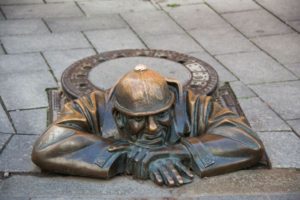
  • Cumil
  • Central Square
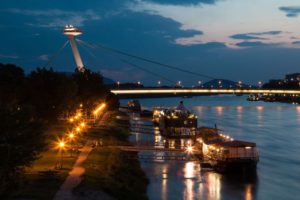
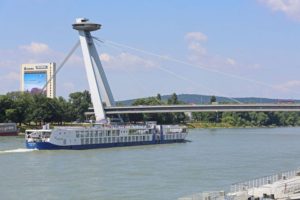
  • Ufo
  • St. Michaels Tower & Street
  • Hviezdoslav Square
  • Old Town hall
  • St. Martins Catedral
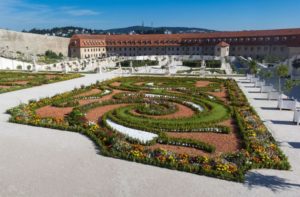
  • Bratislava Castle
  • Miechaels Gate
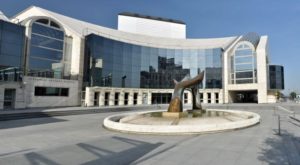
  • Slovak Philharmonic
  • Schone Naci Statue
  • Grassalkowich Palace
  • New Bridge
  • Primates Palace
  • Devín Castle – is located at the confluence of the Danube and Morava Rivers. The castle territory was already inhabited during the Stone Age. It became an important crossroads, especially for the Romans. The history of the castle is linked to the Gread Moravian Empire and Prince Rastislav.

Kremnica

In 1328 King Charles Robert elevated Kremnica to the status of a royal town of miners and coin makers. The town reputation for minig gold and silver extented far beyond its borders. The gold thus became the building block upon which hinged the fouding and development of the town, a process that led to the building of coinage mint and influx of experts mostly from the Holy Roman Empire. Mining shafts around Kremnica and Kremnica mines were used not only to drain water but also for exploration. The oldest of the shafts, called Upper „Heritable“ Tunel, is mentioned in written records dated from as early as 1385. Among the valuable historical legacy of coins minted in Kremnica are Kremnica florins, golden ducats and silver toliars with embossed lily of the House of Anjou. The church castle of Kremnica – the name itself, relating to the location of the church, is a rarity. It is situated on an elevated spot and takes pride in its tower, which offers a truly spectacular view of the entire surrounding area. Thanks to its unique acoustics, the church part of the castle hosts the largest clerical as well as secular organ festivals in Slovakia. In Kremnica mines nearby you will find a place considered to be the geographical centre of Europe.
Banská Štiavnica

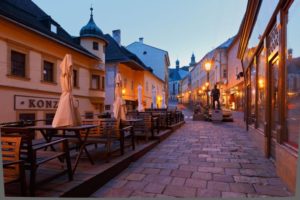
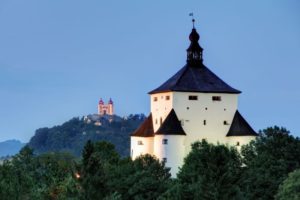
The town conservation area in Banská Štiavnica represents a real gem in Slovakia. The medieval mining town became renowned for the exploitation of silver ore. Rich urban artisans, the so-called waldburgers, lived in burgher houses in Banská Štiavnica. It was a complex of historic houses from which the architecturally remarkable Trinity Square was created, part of which is also the St.Catharine Church with the Town Halls tower in the background. The construction of the Church of St. Catharine was initiated by the so-called ringburgers, or affuent families of local entrepreneurs who lived in opulent burgher houses at the Triniry Square. The church has a single nave and boasts a beautiful stone baptismal font dating back to 16th century and late Gothic statue of Virgin Mary from the same century that used to stand at the main altar. Trinity Square is dominated by the sculputure of the Holy Trininy. You can also find there the House of Marína Pischlová, daughter of a gingerbread maker, with whom Slovak evangelic priest Andrej Sládkovič fell in love and became inspired to write the most beautiful Slovak love epic called Marína. On the upper end sits the renowned Evangelic Seminary, where many poets of the Štúr generations national movement studied.

One of the three technical monuments, which were included in the UNESCO World Heritage List in 1993 was the historic town of Banská Štiavnica and the Technical Monuments in its vicinity, including local tajchy and minig tunels.

Monuments :

  • The New Castle
  • Mining Tunnel Bartolomej
  • The Urban Castle
  • The Helenbachov House
  • Klopačka – baroque tower
  • Open-air museum of mining industry
  • Kalvária – complex of sacral objects…

Zvolen

Is one of the oldest cities in Slovakia with a royal history of over 770 years. The visitors are welcomed directly at the pedestrian zone on Námestie SNP Square by one of the greatest landmarks in the city: the gothic castle. The heart of the city is one of the most beautiful and largest squares in Slovakia, at 740 metres long and 115 metres wide; so there is plenty to explore. The city combines history, modern spirit and beauty of the green tree-lined alleys in an original way to provide space for relaxation and entertainment.

The Zvolen Castle´s history is intertwined with fates of significant figures of the Slovak past. One of these was Magister Knight Donč, rhapsodized by medieval igrici – Slavic traveling troubadours – who served Hungarian King Charles Robert of Anjou. As an owner of four regions, Donč went on an adveturous journey to Avingon, a trip immortalized also by poem Štefan Krčméry under title, Eight Ballads of King Donč. The Castle owns its glory to King Louis I the Great, son of Charles Robert, who had architects build it in the image of Italian town palaces. When Hungary faced the faced the threat of pillaging and plundering by Turks, the Castle saw the addition of external fortifications inspired by Italian Quattrocento design. In the 20th century, the Castle was reconstructed by the Slovak National Gallery and houses a permanent exhibition that includes old Gothic art in Slovakia.

Low Tatras

The Low Tatras or Low Tatra (Slovak: Nízke Tatry) is a mountain range of the Inner Western Carpathians in central Slovakia.

It is located south of the Tatras proper, from which it is separated by the valleys of the Váh and Poprad rivers (the Liptov-Spiš abasement). The valley formed by the Hron River is situated south of the Low Tatras range. The ridge runs west-eastwards and is about 80 km long.

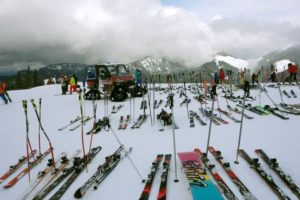
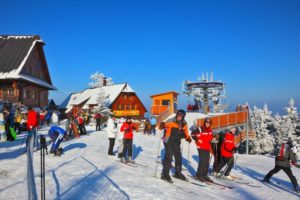
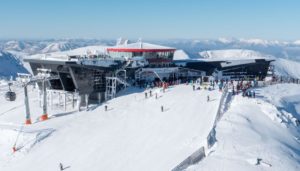
Tourism is very popular in the Tatras. During the winter there are several ski resorts in Low Tatras, for example Jasná, Mýto pod Ďumbierom, and Tále. Not only are these hubs of hiking and cross-country skiing trails, but Jasna is the largest ski resort in Central Europe.

Chopok (2,024 m) is the third highest peak of the Low Tatras range (just after the neighboring Ďumbier and Štiavnica mountains) in central Slovakia. The peak offers a panoramatic view of High Tatra, Liptov and the valley of Hron. There is a chalet (called Kamenná chata) located near the summit. Chopok is situated on the E8 European walking route, between the Ďumbier and Dereše peaks. In addition to this east-west trail, the mountain can be also reached following the hiking trails either from the north (from the Demänovská Dolina valley) or from the south (from the bus stops Trangoška and Srdiečko). The highest points accessible by a chair lift are Chopok úboč (1834 m) on the northern slope and Kosodrevina (1494 m) on the southern slope.
The northern and southern slopes rank among the best skiing terrains in Slovakia. There are three ski areas on the northern slope, with 21 km of prepared skiing tracks, two cable cars, five chair lifts, and ten ski lifts. The southern slope has chair lift and six ski lifts. The mountain is popular among freeskiers. In addition, the Jasná ski center is situated at Chopok’s northern base and the Srdiečko and Tále ski resorts at the southern base.

Bystrá cave

Also Upper Hron region hides its underground beauties – Bystrianska Cave which is the most important cave of the Upper Hron River Valley. It is known by remarkable rocky features and evolution of underground spaces, occurrence of flowstone fills as well as by favourable climatic conditions for speleotherapeutical treatment.

Orava Castle

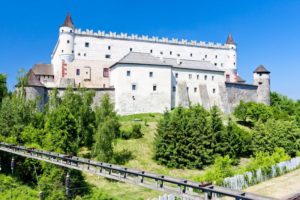
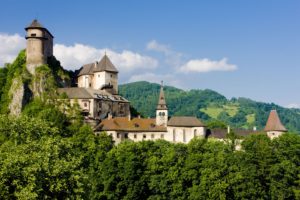
In Oravský Podzámok belongs among the most beautiful and admired Slovak castles. Orava Castle also called the „eagles nest“ on the rock, was the country seat, to which all of Orava belonged. You need to overcome more than three hundert of its stairs in order to get to the most splendid chambers of this mediaval fortress that is perched on the top of a mountain. It was distinguished Protestant priest Juraj Tranovský, who was a pastor at Oravský Podzámok and significantly influenced the religious beliefs of locals. You can also find here the epitaph and gravestone of Palatine Gyorgy Thurzo.

10.03.2019-17.03.2019
07.04.2019-14.04.2019
12.05.2019-19.05.2019
09.06.2019-16.06.2019
07.07.2019-14.07.2019
11.08.2019-18.08.2019
08.09.2019-15.09.2019
13.10.2019-20.10.2019
10.11.2019-17.11.2019

You might also Like

BRATISLAVA, BUDAPEST, VIENNA – THE CORONATION CITIES

Bratislava – Western Part Of Slovakia

Spa Piešťany

© Copyright 2015-2021 by Vitalistravel.com